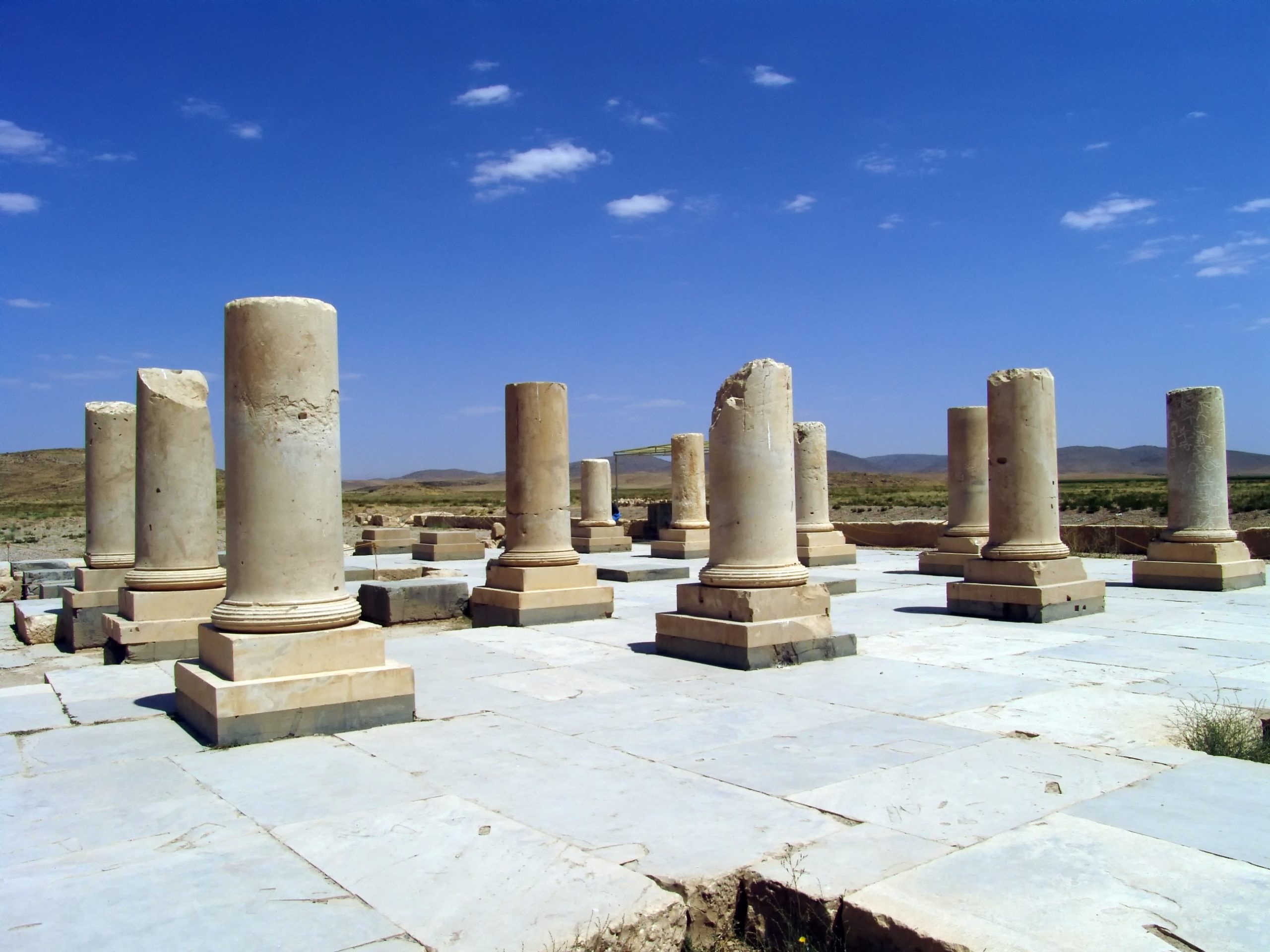
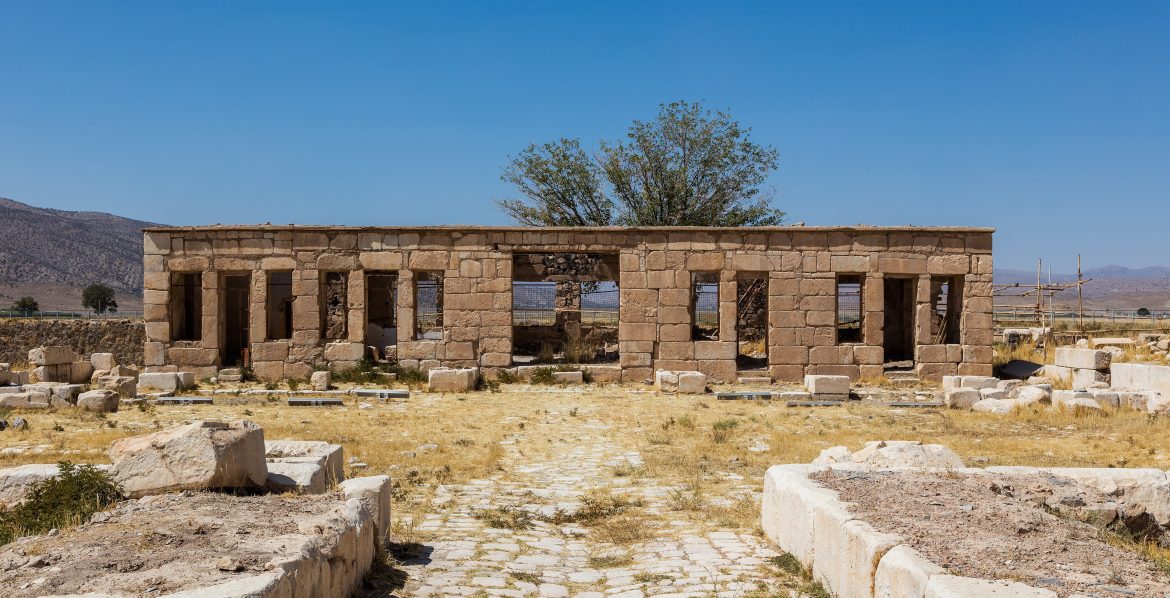
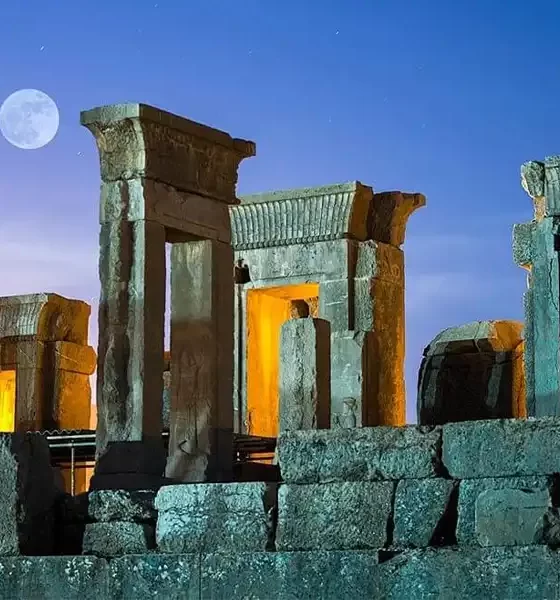
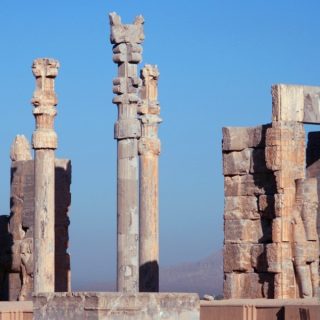
Here, the architecture appears simpler than Persepolis more open, more spacious, and more closely connected to nature. It is in this period that the concept of the Persian Garden first emerges: gardens designed with precise geometric order, flowing water, and a harmonious union between nature and architecture a concept that would later profoundly influence architecture throughout the world. This vast complex includes structures such as the Tomb of Cyrus the Great, the Royal Garden of Pasargadae, the Gate Palace, the bridge, the Audience Hall, the Private Palace, two pavilions, the royal garden water channels, the Tomb of Cambyses, the defensive structures of Tall-e Takht, the sacred precinct, and the valley of Tang-e Bolaghi.
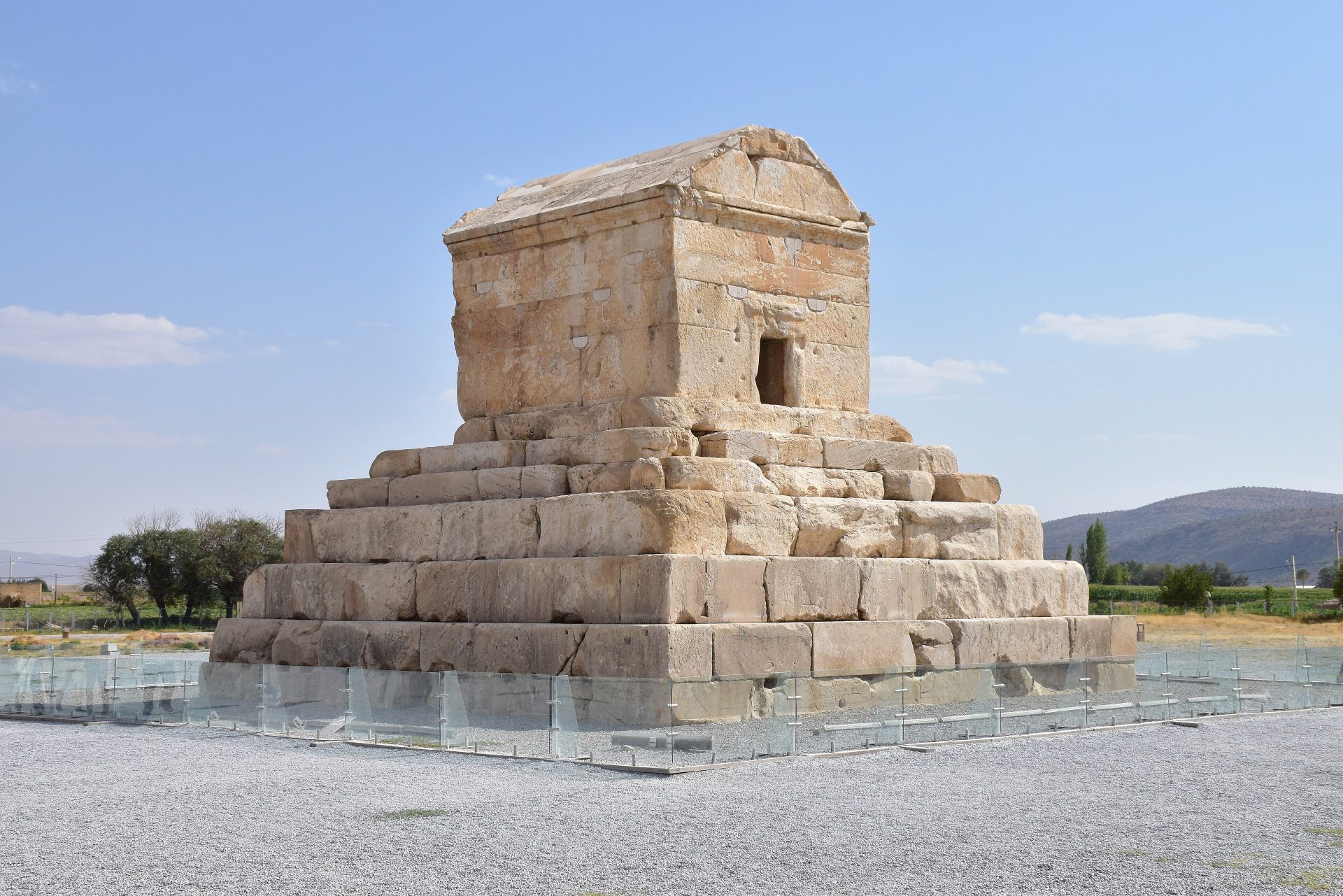
Pasargadae was the fifth site in Iran to be inscribed on the UNESCO World Heritage List. The Tomb of Cyrus, with its stepped form and precisely cut limestone blocks, remains one of the most enduring masterpieces in the history of Iranian architecture. It is a place where, alongside grandeur, one can also perceive a philosophy of humility in power.
The structure originally stood white in color amid the royal gardens. Its stone blocks were joined together with metal clamps known as dovetail fasteners. The monument consists of a six-stepped platform measuring 165 square meters, and a small stone chamber above measuring 7.5 square meters, covered by a sloped roof.