Kohan Diyar is the story of our identity.Let us journey through history together for a few moments.
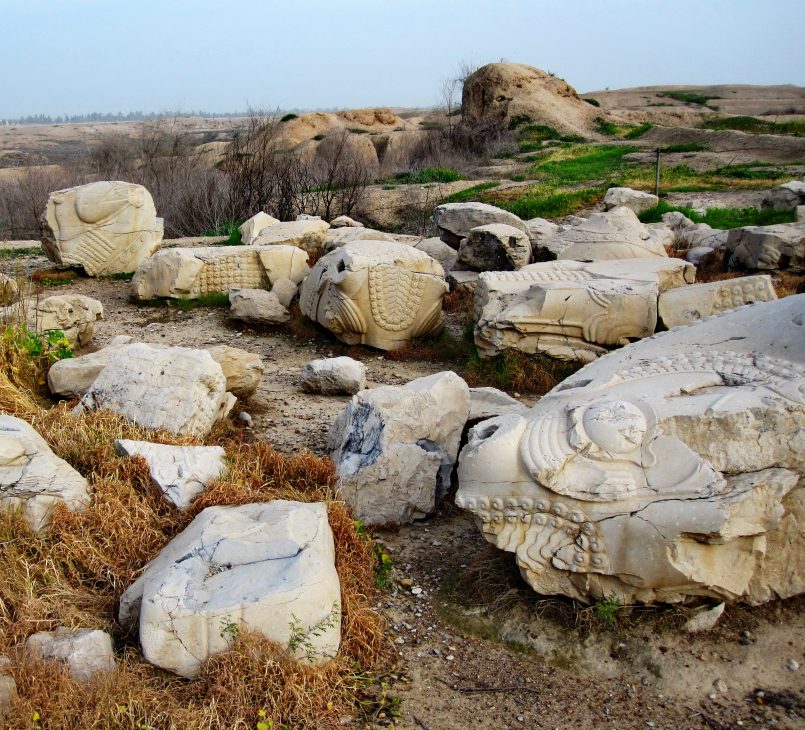
Let us return to the magnificent architecture of the Achaemenid era. The Achaemenid palaces of Susa, especially the Apadana Palace, are among the most important examples of royal architecture in ancient Iran and stand as some of the greatest legacies of the age of Darius the Great.
This complex was built in the ancient city of Susa, one of the principal political and administrative centers of the Achaemenid Empire, and served as the empire’s winter residence and administrative court. Its construction began during the reign of Darius I, at the same time as projects such as Persepolis, and was built upon the remains of the ancient Elamite civilization creating a symbolic connection between ancient traditions and the global power of the Achaemenid Empire.
The complex was constructed on a raised artificial platform and included sections such as the Apadana (audience hall), residential palaces, monumental gateways, and ceremonial spaces. The Apadana itself was a vast hypostyle hall supported by 36 towering columns, crowned with double-headed bull capitals an iconic architectural feature that would later reach its highest expression at Persepolis. With its colonnaded porticoes, towering pillars, and carefully planned spaces, the architecture expressed the grandeur and order of the Achaemenid Empire.
The palace of Susa also reflected the multicultural nature of the empire. In the foundation inscription of Darius (DSf), the king clearly states that materials and craftsmen were gathered from across the empire: Wood came from Lebanon, gold from Sardis and Bactria, lapis lazuli and carnelian from Sogdia, turquoise from Khwarazm, silver and ebony from Egypt, and the stone for the columns from Elam. Likewise, Babylonian, Median, Egyptian, Ionian, and Sardian craftsmen all participated in the construction and decoration of the palace making Susa a true reflection of the empire’s vast reach and organization.
Among the most brilliant features of these palaces were their glazed brick decorations.
The walls were adorned with molded, multicolored bricks that conveyed not only beauty, but also order, power, and royal splendor.
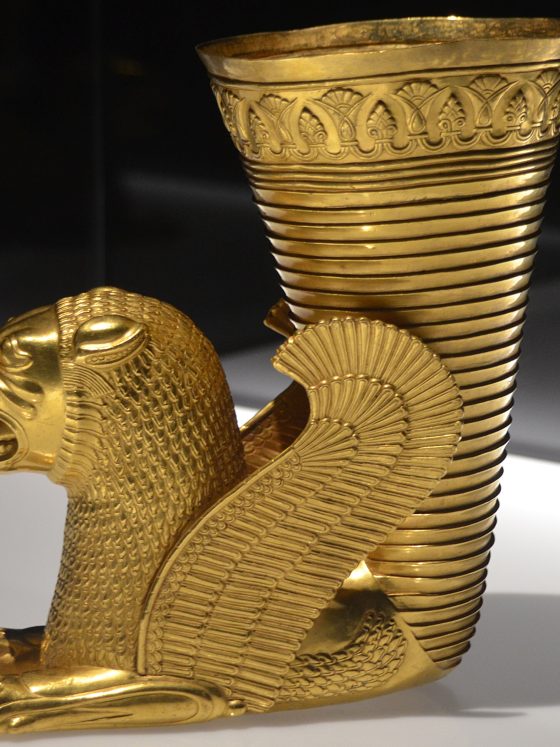
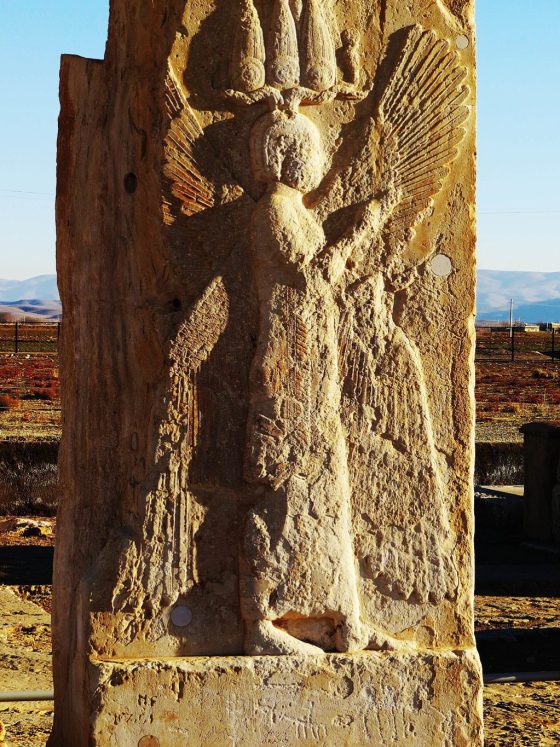
Among the most famous examples is the frieze of the Immortals, a perfectly ordered row of royal guards in elaborate garments, symbolizing the authority of the imperial court. Also prominently featured were depictions of winged lions and other mythological creatures. Historically, the Apadana of Susa and the Apadana of Persepolis are of exceptional significance due to their architectural similarities and the way both expressed the grandeur of Achaemenid Iran on a global scale.
Kohan Diyar is the story of our identity a land whose architects made Iran magnificent and prosperous.