Kohan Diyar 11

Kohan Diyar is the story of our identity.Let us journey through history together for a few moments.
A story of a land that displayed its power through the reliefs of Persepolis, most notably on the stairway of the Apadana Palace. A scene in which the diverse peoples of the empire and representatives of subject nations advance toward the royal court together, wearing their native garments and carrying the gifts of their lands. Alongside Persian and Median nobles, soldiers, horses, and chariots. Unlike Assyrian art, there is no violence here, no exaggeration, no scenes of massacre or terror; instead, the reliefs portray order and hierarchy, courtly ritual, and the unity of the empire. What we see is less a display of domination and more an image of participation and political loyalty to the king.
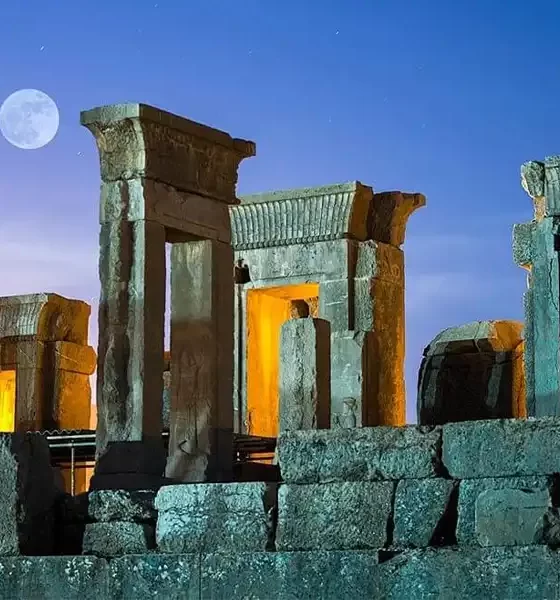
Among the other important inscriptions is the foundation text on the southern terrace, spoken in the voice of Darius the Great, which declares:“By the will of Ahura Mazda, this fortress was built, and I made it strong, beautiful, and worthy.” In ancient Iran, the king was not merely ruler of the earth; he was regarded as the guardian of divine order in the world an order that had to be preserved against chaos, falsehood, and disorder. One of the most important religious concepts in Achaemenid thought was the opposition between truth and falsehood.
This philosophy is reflected in the composition of Persepolis’s reliefs: the repetition of forms, harmonious movement, and arrangements that guide the viewer’s eye a design that embodies both narrative and visual order.
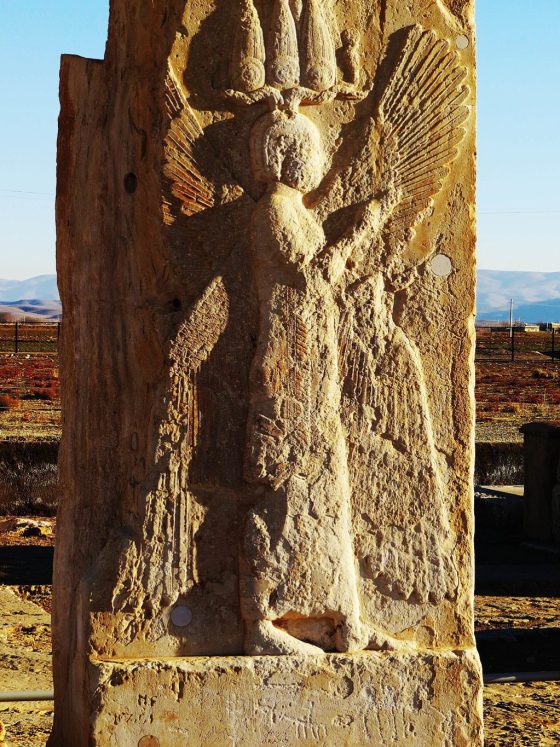
Among the other motifs of Persepolis, seen in the central sections of the stairways, are the figure of the Faravahar, symbolizing divine royal glory; rows of cypress trees, representing blessedness; palm trees, symbolizing abundance; seated lions; and the recurring scene of the lion attacking the bull, an important symbol often interpreted as the triumph of good over evil. Throughout the complex, symmetrical rows of Persian and Median soldiers appear repeatedly, emphasizing unity and ceremonial order. Even traces of pigment found on some reliefs reveal that these carvings were once far more colorful and vibrant than they appear today.
Among the most significant inscriptions is that of the Gate of All Nations, where Xerxes proclaims: “By the aid of Ahura Mazda, I built the Gate of All Nations.”
The sculptures guarding this entrance human-headed, bull-bodied figures in the Assyrian tradition are mythological beings that serve both as protectors and symbols.
Kohan Diyar is the story of our identity the story of a land where humanity did not merely carve stone, but immortalized meaning itself in image.