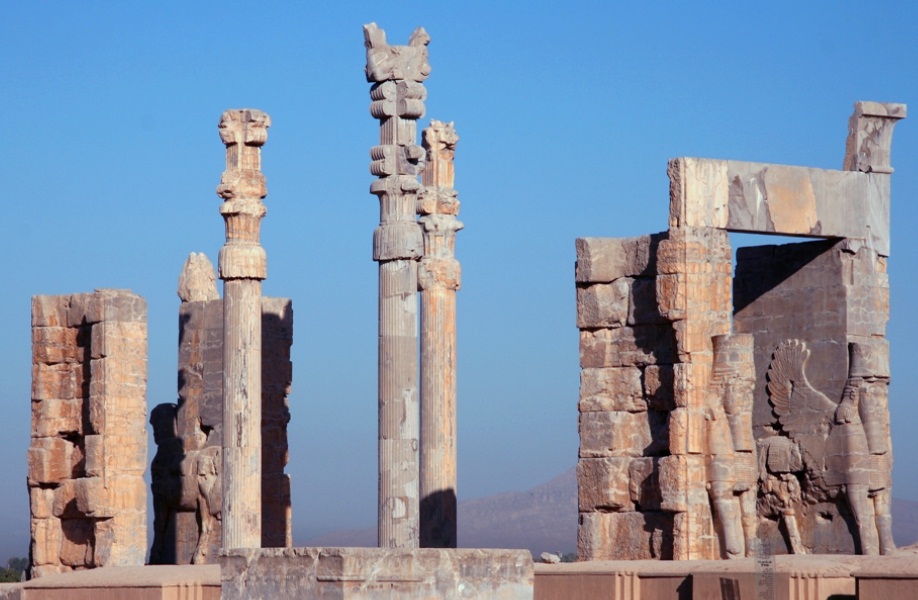
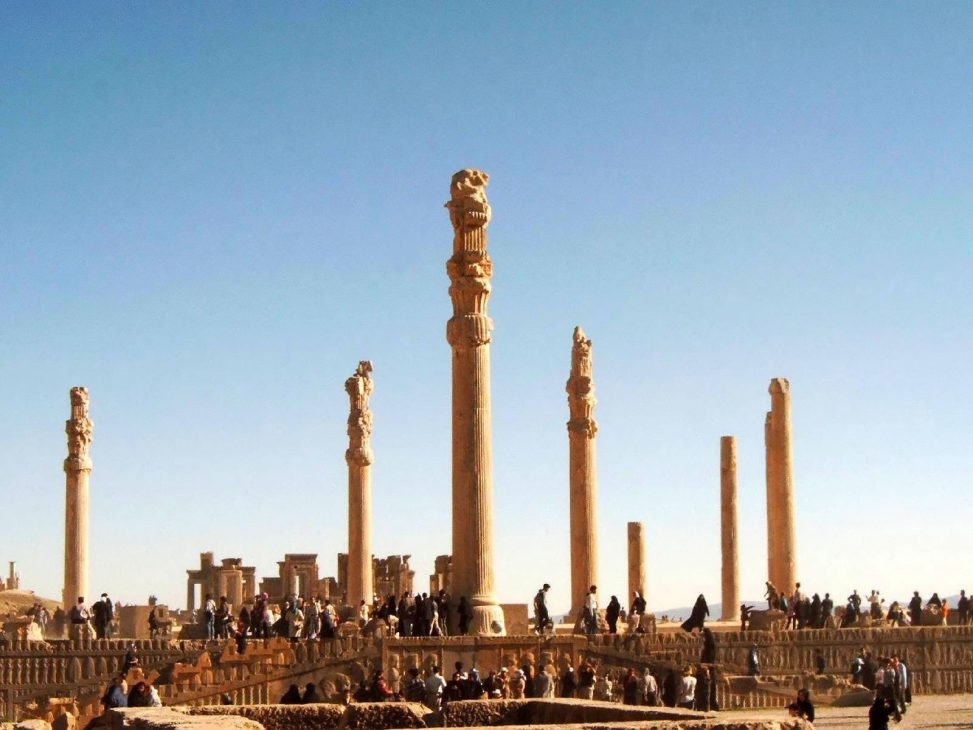
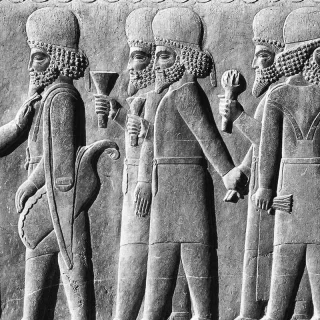
The display of power and order reaches its peak at Persepolis. A ceremonial and governmental city, built not for daily life, but to project authority. Its Apadana Hall, with more than 70 columns, its Hall of One Hundred Columns, and its magnificent gateways adorned with intricate reliefs all demonstrate an extraordinary level of engineering and design.
Tall, slender columns…animal-headed capitals shaped like bulls, lions, and eagles… the extensive use of finely cut stone…advanced metal joints for structural strength… and precise geometric symmetry. The stones were laid without mortar, fitted together with extraordinary precision, and the columns were constructed in separate pieces and assembled on site. In some structures, the engineering was even designed to withstand earthquakes. Persepolis, built by Darius the Great for governmental and ceremonial purposes, served as one of the four capitals of the Achaemenid Empire. Its construction and completion took nearly one hundred years. Similar architectural complexes were also built in Susa and Ecbatana by Darius, and like Persepolis, they were used to host distinguished guests and foreign envoys, to conduct royal ceremonies, and to house the kings.
Kohan Diyar is the story of our identity a land where its architects, through stone and order,did not merely build monuments…they shaped history itself.