From a Single Cocoon to the World’s Most Luxurious Fabric: The Extraordinary Birth of Silk

If the history of silk is a story of empires and global trade, its production is a remarkable collaboration between nature and human craftsmanship. Unlike most natural fibres, which are harvested from plants or animal fleece, silk is the world’s only natural continuous filament fibre a single thread that can extend for hundreds of metres without interruption. Everything begins with an unlikely source: the silkworm.

From Mulberry Leaf to Luxury Textile

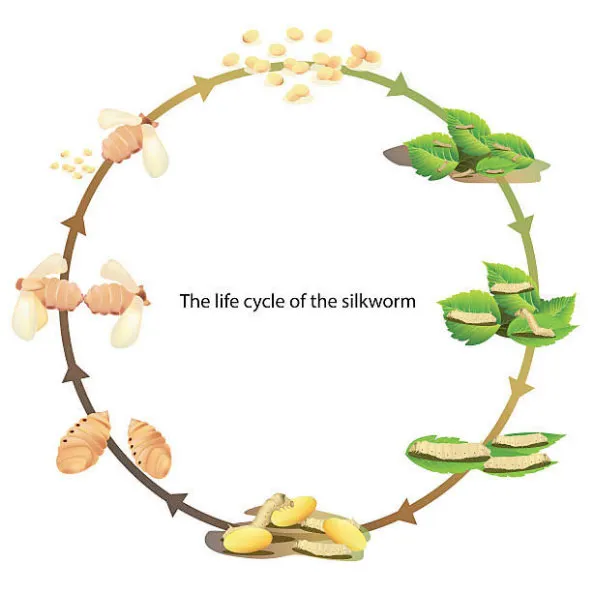
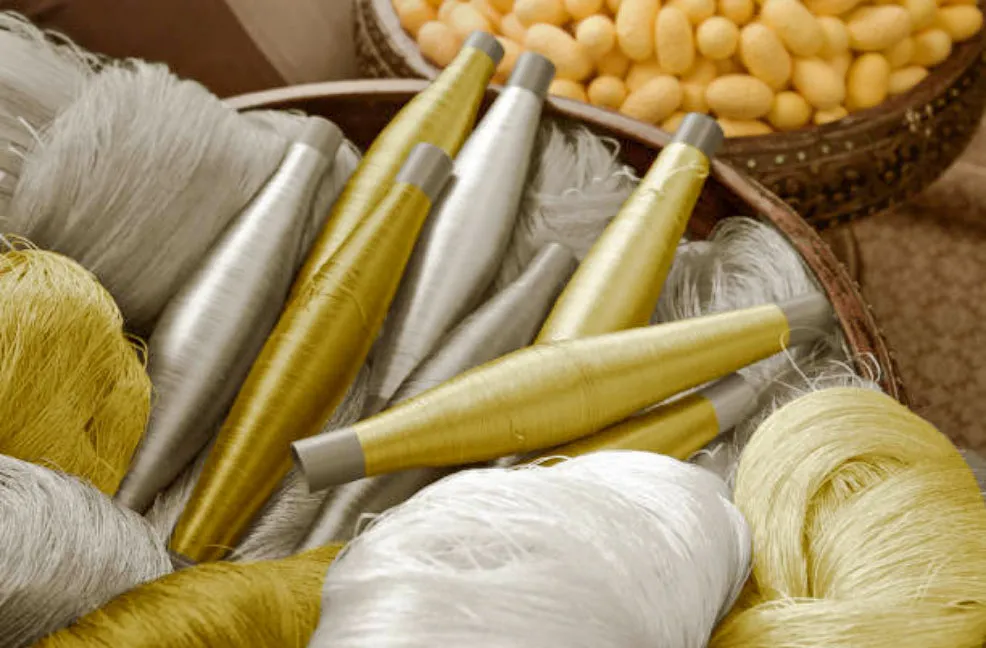
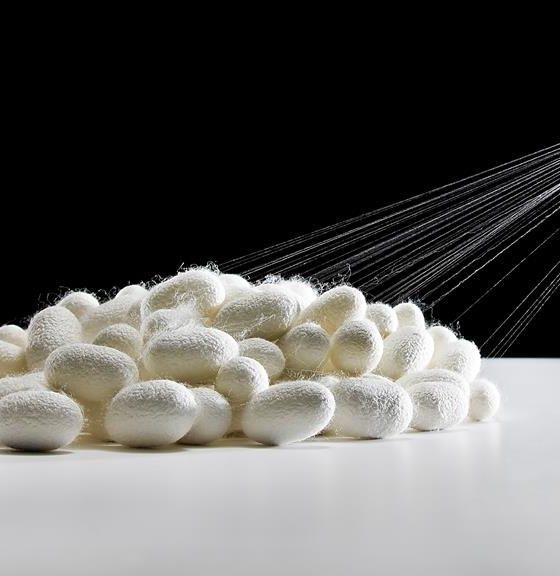
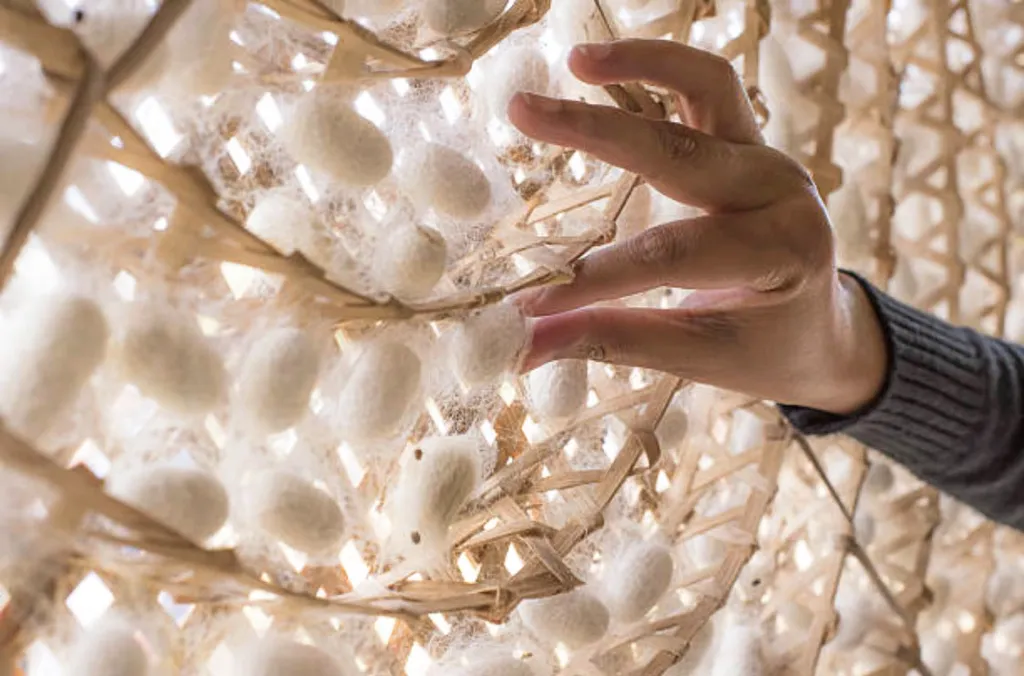
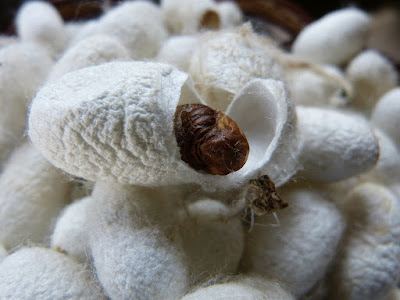
The journey starts with the domesticated silkworm, Bombyx mori. After hatching from tiny eggs, the larvae spend nearly a month feeding almost exclusively on fresh mulberry leaves. During this period, they grow rapidly, shedding their skin several times while developing two specialised silk glands inside their bodies. When the caterpillar reaches its final stage of growth, it begins spinning a cocoon. Liquid protein is released through two tiny openings near its mouth and solidifies instantly upon contact with air, forming an extraordinarily fine yet remarkably strong filament. Over the course of two to three days, the silkworm wraps itself inside a protective cocoon made from a single continuous thread. That cocoon marks the beginning of silk production. To preserve the filament, traditional silk production gently heats the cocoons before the moth emerges. If the moth breaks through naturally, the continuous thread is cut into short fibres, making it impossible to reel the long filament prized by the textile industry. Once softened, the cocoon is carefully unwound. Because each cocoon produces an extremely fine filament, several strands are reeled together and twisted into silk yarn before being washed, degummed, dyed, finished, and finally woven into fabric. This traditional process has also generated ethical debate. Since conventional silk production prevents the moth from completing its life cycle, many consumers and designers have turned their attention toward alternative methods that place greater emphasis on animal welfare.

The Science Behind Silk’s Beauty

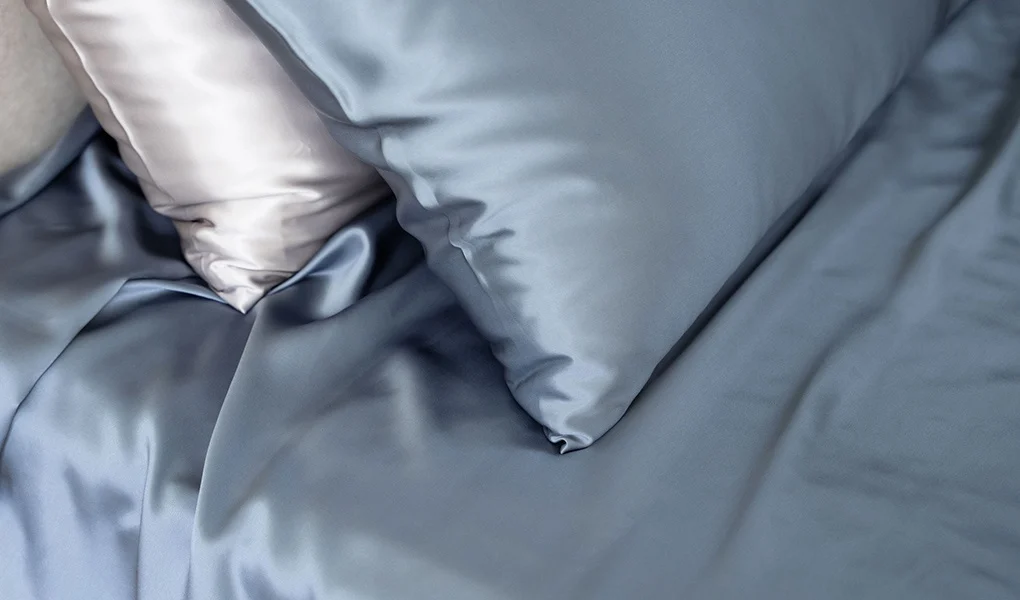
Silk owes its unique character to two naturally occurring proteins. Fibroin forms the strong structural core of the fibre, while sericin acts as a natural gum, binding the filaments together inside the cocoon. During processing, much of the sericin is removed through degumming, revealing the softness, smoothness, and fluid drape for which silk is celebrated. Its luminosity comes from more than a polished surface. The microscopic prism-like structure of silk fibres refracts light in multiple directions, producing a depth and brilliance that changes with movement. Rather than reflecting light uniformly, silk appears to glow from within a quality that has made it one of fashion’s most captivating materials for centuries.

Not All Silk Is the Same

Although silk is often spoken of as a single material, it exists in many different forms.

Mulberry Silk is the finest and most widely used variety. Produced by silkworms fed exclusively on mulberry leaves, it is prized for its smooth texture, bright colour, and exceptional consistency, making it the preferred choice for luxury fashion houses.

Tussar Silk, often called wild silk, has a naturally golden tone and a more textured appearance. Eri Silkoffers warmth and softness with a slightly wool-like character, while Muga Silk, produced only in India’s Assam region, is celebrated for its naturally rich golden colour and remarkable rarity.

Growing environmental awareness has also encouraged interest in Peace Silk, or Ahimsa Silk, in which the moth is allowed to emerge naturally before the remaining fibres are collected. Although the resulting yarn is shorter and less uniform than conventional silk, it offers an alternative for consumers seeking more ethical production methods.

At the same time, biotechnology is opening a new chapter in silk production. Researchers are developing laboratory-grown silk proteins and bioengineered materials inspired by spider silk, combining the elegance of natural fibres with the possibilities of modern science.
One Fibre, Countless Fabrics

One of the most common misconceptions about silk is that names such as satin, chiffon, or organza describe different fibres. In reality, they usually refer to fabric constructions or weaving techniques, many of which can be produced from either natural silk or synthetic fibres. The same silk yarn can be transformed into dramatically different textiles simply by changing the weave. Silk Satin offers a glossy, fluid surface that has become synonymous with eveningwear. Silk Charmeuse drapes softly against the body, making it a favourite for lingerie and bias-cut dresses. Silk Chiffon is almost weightless and transparent, while Silk Organza is crisp enough to create architectural volume in bridalwear and haute couture. Silk Crepe and Georgette provide a softer, textured finish with graceful movement, whereas Silk Twillcombines durability with a distinctive diagonal weave, making it the signature fabric behind iconic luxury scarves such as those produced by Hermès. More structured fabrics including Dupioni, Mikado, Taffeta, Jacquard, and Brocade bring body, texture, and sculptural form to tailoring, ceremonial dress, and couture. The fibre remains the same. The personality changes completely.

Why Designers Blend Silk

Although pure silk is one of the world’s most luxurious fibres, it is often blended with other natural or technical materials to achieve specific performance qualities. Blending silk with cashmere creates exceptional softness and warmth. Combined with wool, it improves resilience while maintaining elegance. Mixed with linen, silk introduces fluidity and refinement to warm-weather fabrics. Cotton makes silk more breathable and practical for everyday wear, while elastane adds flexibility for contemporary tailoring and sports-inspired luxury. Even blends with viscose or polyester can serve a purpose, improving durability, reducing cost, or creating fabrics that are easier to maintain without entirely sacrificing silk’s signature drape. For this reason, the value of a silk fabric cannot be judged by fibre percentage alone. The quality of the raw material, spinning, weaving, finishing, and design ultimately determine its character.

A Material That Continues to Evolve

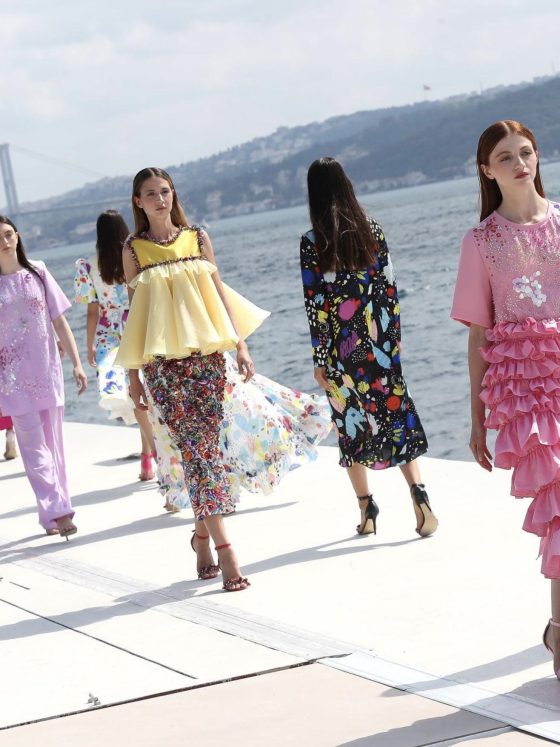
Today, silk is far more than a historical luxury reserved for emperors and royal courts. It remains one of fashion’s most versatile and technically sophisticated fibres, capable of appearing in haute couture, bridalwear, tailoring, scarves, lingerie, home textiles, and even biomedical innovation. Its greatest strength has always been its ability to transform. The same filament that once protected a silkworm can become an ethereal chiffon gown, a sculptural couture dress, a perfectly tailored jacket, or an iconic silk scarf that lasts for generations. Perhaps that is silk’s most extraordinary quality. It never changes its essence only the stories it chooses to tell.

What do you think?

Your email address will not be published. Required fields are marked *

No Comments Yet.