Silk: The Thread That Built Empires and Conquered the World of Fashion
From an Imperial Secret to Fashion’s Most Enduring Language of Luxury
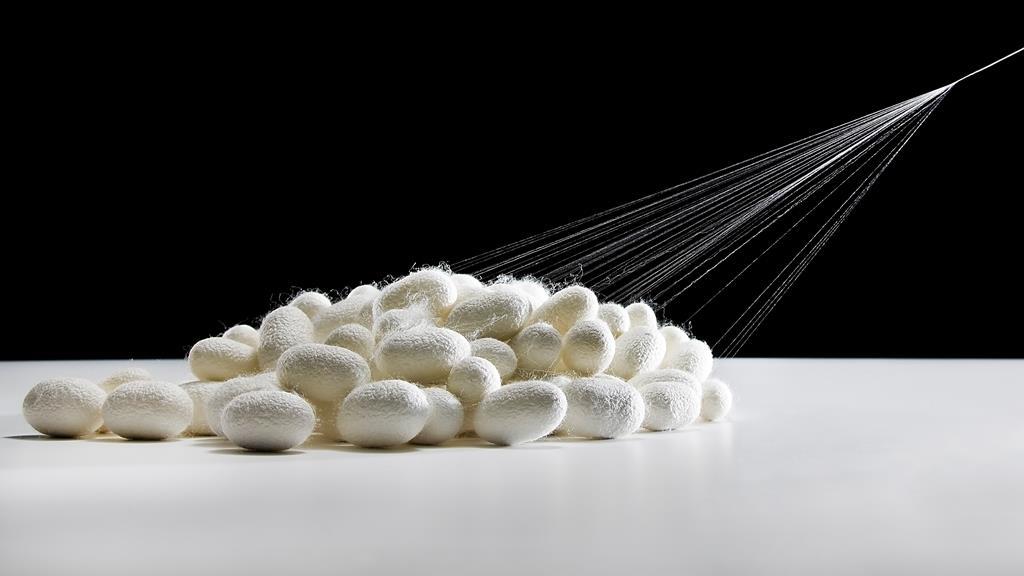
Before silk became the language of evening gowns, couture ateliers, and meticulously folded scarves, it was something far more elemental: a single, almost impossibly fine filament spun by a small creature to protect itself. Few materials have travelled such an extraordinary distancegeographically, culturally, or symbolically. Silk moved from the cocoon to the imperial treasury, from the weaving workshops of China and Persia to Byzantine palaces and European courts, and finally into the vocabulary of modern fashion. Its history is not simply the story of a textile. It is the story of secrecy, power, trade, desire, migration, technological exchange, and cultural reinvention. For centuries, silk was one of the most valuable substances on earth. It crossed deserts, mountains, seas, and political borders. It passed through the hands of merchants, monarchs, artisans, diplomats, and smugglers. Wherever it arrived, it was not merely worn. It was translated. China transformed silk into an imperial code. Persia reimagined it through royal and poetic imagery. Byzantium used it to construct religious and political authority. India connected it to ceremony, marriage, and inheritance. Japan turned it into a surface for seasonal symbolism and visual storytelling. Europe used it to dress aristocracy and, eventually, to define the very idea of luxury fashion. Silk has never been just fabric. It has always been an expression of how societies imagine beauty, hierarchy, the body, and power.
Silk Is a Fibre Before It Is a Fabric
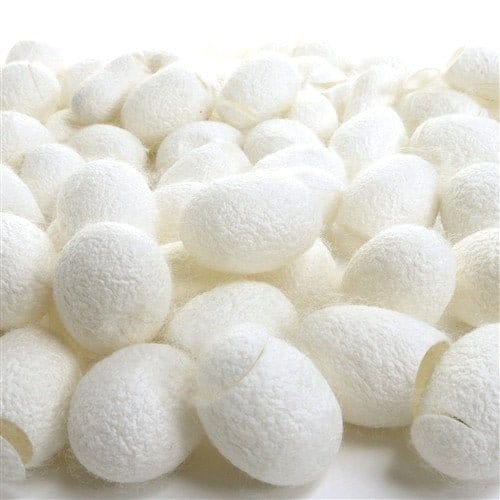
In contemporary fashion language, the word “silk” is often used rather loosely. Almost any fabric that feels soft, looks glossy, or moves fluidly across the body may be described as silk. Technically, however, silk is not a particular style of fabric. It is a natural protein fibre. The most commercially important silk is produced by the domesticated mulberry silkworm, Bombyx mori, whose larvae feed primarily on mulberry leaves before spinning their cocoons. What we call silk may therefore refer to three different stages of the same material: the filament extracted from the cocoon, the yarn formed from those filaments, or the finished textile woven from that yarn. This distinction explains why silk can take on such radically different personalities. It can become chiffon weightless, translucent, and almost atmospheric. It can become organza sheer yet architectural. It can become charmeuse fluid, sensual, and reflective. It can become twill structured enough to carry the intricate print of a luxury scarf. It can become taffeta, brocade, velvet, dupioni, or mikado, each with its own density, movement, surface, and emotional register. Silk is not one fabric. It is an entire family of possibilities. This is also why silk should never be confused with satin.
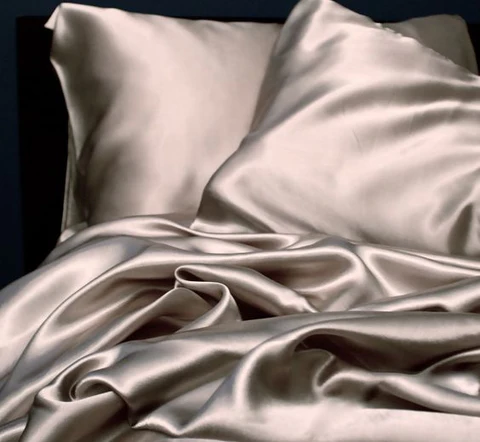
Satin is a weave, not a fibre.
A satin fabric can be woven from natural silk, but it may also be produced using polyester, viscose, acetate, or other fibres. Silk satin describes a satin weave made with silk. Satin alone does not guarantee the presence of silk at all. The same confusion exists around the historical expression “artificial silk.” Rayon and viscose were once promoted under this name because they imitated silk’s softness and luminosity. Later, polyester offered an even cheaper approximation of its sheen. But resemblance is not equivalence. Synthetic fabrics can reproduce the idea of shine. What they do not fully replicate is silk’s specific combination of temperature regulation, moisture absorption, tactile softness, strength, luminosity, and movement. A polyester satin may reflect light. Silk appears to hold it.

Why Silk Seems to Glow
The beauty of silk begins at a microscopic level. A silk filament consists primarily of two proteins: fibroin and sericin. Fibroin forms the strong inner structure of the fibre. Sericin is the gum-like coating that holds the strands together inside the cocoon. During processing, much of the sericin is removed through a stage known as degumming, revealing a fibre that is softer, smoother, and more luminous. Silk’s radiance is not simply the result of a glossy surface. Its structure allows light to be reflected and refracted at different angles. This creates the subtle, shifting luminosity that distinguishes silk from the more uniform shine of many synthetic fabrics. As the wearer moves, the colour appears to move too. A silk dress never looks entirely static. Light travels across it, shadows deepen within its folds, and its tone changes with the position of the body. This is one reason silk has remained so powerful in fashion photography, cinema, eveningwear, and couture. It does not merely cover the body; it responds to it. Silk also possesses a combination of qualities rarely found together in a single natural fibre. It is fine yet relatively strong, lightweight yet capable of structure, soft yet highly responsive to weaving and finishing. It accepts colour beautifully. Jewel tones appear deeper. Pastels appear more luminous. Black becomes almost liquid. Yet silk is not invulnerable. Prolonged exposure to sunlight can weaken it. Perspiration, perfume, chemicals, friction, and improper storage may damage its colour or structure. Its beauty requires care, and perhaps this fragility has always formed part of its appeal. Luxury, after all, has often been defined not only by rarity, but by the demand for attention.
The Empress, the Tea, and the Cocoon
The most famous story of silk’s discovery begins beneath a mulberry tree. According to Chinese legend, the empress Leizu also known as Xi Ling-shi was drinking tea when a silkworm cocoon fell into her cup. The heat softened the cocoon, allowing a fine filament to unravel. Leizu recognised that the thread could be reeled, combined, and woven into cloth. Later versions of the legend credit her with much more than a fortunate discovery. She is said to have developed methods of cultivating silkworms, created tools for silk reeling, and taught the art of weaving. In Chinese cultural tradition, she came to be honoured as the “Mother of the Silkworm.” It is a beautiful origin story: elegant, domestic, almost cinematic. It is also almost certainly a myth. Sericulture is far too complex to have emerged through a single moment of revelation. The domestication of the silkworm, cultivation of mulberry trees, control of temperature and humidity, harvesting of cocoons, reeling of filament, and weaving of cloth would have required generations of accumulated knowledge. The significance of the Leizu story lies elsewhere. It reveals how deeply silk became embedded in China’s cultural identity. Silk was not regarded as an ordinary craft. Its origin had to belong to an empress.
The First Silk Cultures
The earliest organised production of silk is generally associated with ancient China, where archaeological evidence places its use deep within the Neolithic period. Establishing a precise date remains difficult. Textiles are fragile archaeological materials. Unlike stone, ceramic, or metal, fibres decay easily in soil and moisture. Much of the earliest history of cloth has therefore vanished. What remains clear is that Chinese societies gradually domesticated the wild ancestors of Bombyx mori and reshaped the insect’s entire life cycle around human production. The domesticated silkworm eventually became profoundly dependent on people. It lost much of its ability to survive independently and evolved specifically within the controlled environment of sericulture. This process required far more than feeding insects. Mulberry trees had to be cultivated. Eggs needed to be preserved and hatched under carefully controlled conditions. Larvae had to be fed repeatedly with fresh leaves. Temperature and humidity had to be monitored. Cocoons needed to be harvested at the correct moment, sorted, softened, and reeled before the continuous filament was broken. Silk was therefore never a simple gift of nature. It was the result of a highly engineered relationship between nature and human labour. From the beginning, silk belonged simultaneously to agriculture, science, craftsmanship, and industry. The knowledge required to produce it became one of China’s most valuable secrets. Controlling the material was profitable. Controlling the technology behind it was a form of geopolitical power.
When Fabric Became Rank
In imperial China, silk did not merely communicate wealth. It communicated position. The type of fabric, quality of weave, colour, motif, embroidery, and construction of a garment could indicate a person’s relationship to the court and the state. During different dynasties, systems of dress regulated who could wear certain colours, symbols, or types of textile. Clothing functioned as a visible hierarchy. Court robes and historical garments broadly associated today with hanfu made use of layered silhouettes, long sleeves, crossed collars, belts, and large surfaces of cloth. These expansive areas allowed silk to carry symbols of office, cosmological imagery, imperial animals, auspicious motifs, and elaborate embroidery. A robe could be read much like an official document. Silk also extended beyond the body. It appeared in ceremonial hangings, curtains, banners, tents, paintings, and calligraphy. Before paper became widely used, silk provided a lightweight and prestigious surface for writing and image-making. It circulated as tribute, diplomatic exchange, imperial reward, and even a form of currency. Its value came from more than beauty. Silk was labour-intensive, technically demanding, difficult to produce, and closely tied to political authority. It was textile transformed into capital.
The Silk Roads Were Never One Road
The phrase “Silk Road” encourages a seductive but misleading image: a single route stretching neatly from China to Europe. In reality, the Silk Roads were a shifting constellation of overland and maritime networks linking East Asia, Central Asia, the Iranian Plateau, India, Mesopotamia, the Mediterranean, and Europe. They did not transport silk alone. Spices, metals, precious stones, glass, ceramics, paper, pigments, animals, and technologies moved along these routes. So did religions, languages, medical knowledge, musical instruments, artistic forms, and political ideas. Silk became the symbolic material of the network because of its value and desirability, but no single merchant necessarily carried it from China to Rome. A bolt of silk could change hands repeatedly. It might be purchased in one region, dyed in another, cut and resewn elsewhere, or combined with local materials and motifs before reaching its final destination. Along the journey, its meaning changed. A Chinese textile arriving in Persia might be absorbed into Persian visual culture. A Persian design could then influence Central Asian or Byzantine weaving. Motifs moved independently of materials. Techniques were copied, adapted, misunderstood, and reinvented. The Silk Roads were not merely trade routes. They were engines of aesthetic mutation.
Persia: Where Silk Was Rewritten
Persia is too often described as a corridor between China and Europe, as though its historical role were limited to geography. In reality, Persia was one of the great laboratories of silk. Its position on the Iranian Plateau made it central to long-distance trade, but Persian artisans did much more than receive and redistribute textiles. They transformed silk through local systems of weaving, colour, symbolism, poetry, and court culture. During the Sasanian period, Persian silks became known for their bold visual order: medallions, paired animals, royal hunts, mythical creatures, and symbols of sovereignty. These designs projected political power. They also travelled extensively. Sasanian-inspired motifs appeared in Byzantine textiles, Central Asian works, early Islamic weaving, and even medieval European church collections. Persian visual language became portable, carried across borders by cloth. When the Sasanian Empire fell in the seventh century, its textile culture did not simply disappear. Artisans, looms, patterns, and technical knowledge continued under new political and religious systems. This continuity is essential. Dynasties fall faster than crafts. A ruling order may collapse in a matter of years, while a weaving tradition survives for centuries in the hands of the people who actually know how to make it. Under the Safavids, silk became central to Persia’s economy and international identity. The northern regions of Gilan and Mazandaran were major producers of raw silk. Isfahan emerged as a sophisticated centre of trade, production, diplomacy, and design. During the reign of Shah Abbas I, the state expanded its control of silk commerce and strengthened commercial relationships with European markets. Armenian merchants, particularly those connected to New Julfa, played a crucial role in linking Persian silk to international trade networks. Safavid textiles were remarkable not only for their technical complexity but for their narrative ambition. They carried human figures, courtly encounters, lovers, hunters, flowers, birds, and imagery drawn from poetry and manuscript painting. The surface of silk became a place where literature, fashion, politics, and desire met. These textiles were used for robes, jackets, trousers, belts, court dress, furnishings, and diplomatic gifts. Persian silk was never merely decorative. It was intellectual, political, and emotional. Persia did not imitate East or West. It absorbed both and returned something unmistakably its own.
Rome, Desire, and the Anxiety of Transparency
When silk reached the Roman world, it arrived as a material of mystery. Roman consumers knew the textile but not the full reality of its production. The distance between the wearer and the cocoon only intensified its allure. Silk was expensive, imported, and associated with the East. It was also controversial. Some Roman writers condemned silk garments for their transparency and sensuality. The material was accused of revealing too much of the body and encouraging excessive luxury. This criticism tells us something important: silk was never politically neutral. It provoked arguments about femininity, masculinity, morality, class, foreign influence, and the public display of wealth. Its ability to reveal the outline of the body made it both desirable and suspicious. Silk did not simply dress the Roman body. It destabilised the rules around how that body should be seen.
Byzantium and the Politics of Possession
For centuries, Byzantium depended heavily on eastern sources of silk. That dependence became a political and economic vulnerability. In the sixth century, during the reign of Emperor Justinian I, silkworm eggs were reportedly brought into Byzantine territory, allowing the empire to establish its own production. Whether understood as smuggling, industrial espionage, or strategic technology transfer, the event marked a major shift. Byzantium no longer wished merely to purchase silk. It wanted to possess the means of producing it. Silk weaving became tied to imperial authority. Byzantine textiles were produced in vivid colours and decorated with religious, animal, and royal imagery. Metallic threads heightened their visual impact. These silks appeared in imperial clothing, ecclesiastical garments, ceremonial textiles, and diplomatic gifts. To wear silk in Byzantium was not simply to display wealth. It was to place the body within a system of sacred and political order. Even after local production expanded, the empire remained connected to the wider silk economy. Materials, designs, and technical knowledge continued to cross borders. No civilisation ever owned silk completely.
Japan: Silk as Surface, Season, and Restraint
In Japan, silk became inseparable from court dress, ceremony, and the visual culture of the kimono. The kimono’s construction is deceptively simple. Its geometry depends on relatively straight panels rather than the sculpted cutting associated with much of Western dress. Yet this structural restraint gave the textile extraordinary power. The surface became the story. Dyeing, weaving, painting, embroidery, resist techniques, and metallic detailing transformed silk into a portable landscape. Flowers could indicate a season. A bird might suggest longevity. Water, clouds, pine, bamboo, or plum blossom could signal a particular occasion, age, or poetic association. The meaning of the garment lay not only in its silhouette but in the relationship between fabric, motif, colour, season, status, and method of dressing. Silk operated as a highly refined language of timing and context. A beautiful kimono was not simply beautiful in isolation. It was beautiful because it was appropriate to the person, the moment, the weather, and the ritual. During the modernisation of Japan in the Meiji era, silk also became an industrial and economic force. The Tomioka Silk Mill helped introduce mechanised production, while Japan rose to become one of the world’s leading exporters of raw silk. Silk connected Japan’s traditional craft culture to its modern industrial identity.
India: Silk as Memory
India holds one of the world’s richest and most diverse silk traditions. The country’s silk culture cannot be reduced to a single region, fibre, weave, or visual language. Different areas developed distinctive relationships with silk, producing textiles that varied in weight, colour, structure, motif, and ritual meaning. Silk saris became particularly important in weddings, religious ceremonies, and family traditions. Gold-coloured zari, complex borders, flowers, animals, architectural patterns, and regional symbols gave each textile its own identity. A silk sari might be purchased for one woman and worn decades later by another. Its value could deepen with time. Here, silk operates not only as fashion or luxury but as memory. It carries family history, photographs, ceremonies, and emotional inheritance. It is important to remember that a sari is a form of dress, not a fibre. Saris may be made from cotton, silk, synthetics, or blends. Yet silk versions often hold particular ceremonial status because of their colour, luminosity, richness, and capacity for intricate weaving. In India, silk is not simply worn for the present moment. It is prepared for the future.
Persia and the Ottoman World: Textile as Architecture
Across Persia, Central Asia, and the Ottoman Empire, garments such as the qaba, khalat, chapan, and kaftan created large, uninterrupted surfaces on which luxury textiles could speak. Unlike garments shaped primarily through tight tailoring, these robes often relied on relatively straight cuts, long sleeves, and generous expanses of fabric. The cloth itself carried the visual drama. Large-scale florals, medallions, stripes, arabesques, metallic threads, and complex weaves could remain visible without being fragmented by excessive seaming. At the Ottoman court, silk was integral to the performance of imperial power. Kaftans made from velvet, brocade, satin, or textiles woven with metallic threads transformed the ruler’s body into a political image. Scale mattered. A large motif could only be fully displayed on a large garment. Dense weaving required more material and labour. Deep colour required better dye and expertise. Textile quality communicated authority before a word was spoken. The presentation of a robe of honour also held enormous political meaning. To receive a luxurious garment from a ruler could signify loyalty, promotion, alliance, or favour. The robe was not merely a gift. It was a public redefinition of the person wearing it.
Europe Learns to Manufacture Luxury
In medieval and Renaissance Europe, silk remained expensive, difficult to obtain, and closely associated with elite power. As production expanded in Italian cities and later in France, silk weaving became both an artistic and economic priority. Velvets, damasks, brocades, satins, and taffetas entered court dress, ecclesiastical garments, and aristocratic interiors. During the Renaissance, clothing operated as visible wealth. Silk appeared in sleeves, doublets, skirts, cloaks, gowns, and ceremonial dress. Metallic threads and complex surface treatments increased both the material cost and the social impact of the garment. The body became an exhibition space for textile wealth. By the seventeenth and eighteenth centuries, European courts particularly France understood that controlling luxury production was a form of national power. Silk was no longer just an exotic import. It became part of a deliberate industrial strategy. Governments supported domestic manufacturers, trained artisans, regulated quality, and used court consumption to establish aesthetic authority. The luxury textile industry became a political project. Silk dressed both women and men. It appeared in corseted gowns, structured skirts, embroidered waistcoats, coats, shoes, ribbons, stockings, and accessories. In candlelit rooms, its reflective surface amplified movement and made colour appear unusually intense. Silk understood the theatre of the court. It caught light precisely where power wanted to be seen.
The Industrial Revolution and the Invention of Imitation
The Industrial Revolution transformed textile production. Mechanised spinning, weaving, and printing increased speed and scale. Patterns that once required immense manual labour could be produced more efficiently. Fashion became increasingly connected to manufacturing. Yet silk remained expensive. The silkworm could not be fully industrialised in the same way as a mechanical loom. Sericulture still depended on living organisms, agricultural conditions, timing, and skilled intervention. The fashion industry wanted silk’s beauty without silk’s cost. This desire led to the development of substitute fibres. Rayon and viscose imitated its drape. Acetate reproduced its sheen. Nylon and polyester introduced durability, affordability, and mass production. Suddenly, glossy and fluid fabrics were no longer limited to aristocratic wardrobes. Imitation democratised the appearance of silk. Paradoxically, it also made real silk more exclusive. When a visual effect becomes widely available, luxury begins to depend on what cannot be seen immediately: fibre content, craftsmanship, provenance, touch, and knowledge. Natural silk became less important as the only way to create shine and more important as the authentic version of that shine.
Silk Enters Modern Fashion
In the twentieth century, silk began to shed some of the rigid architecture of court dress. It moved closer to the body. Bias-cut gowns allowed silk to fall diagonally, creating garments that appeared to flow rather than hold their shape. Lingerie-inspired dressing brought silk into intimate proximity with skin. Blouses softened tailoring. Scarves turned printed silk into a portable object of identity. Silk became modern not by rejecting its luxurious history, but by learning restraint. Its power no longer depended on embroidery, metallic thread, or enormous volume. A perfectly cut silk slip could communicate more sensuality than the most elaborate court gown. Designers discovered that silk could express contradiction. It could appear innocent or erotic. Minimal or opulent. Controlled or undone. Masculine in a silk tie, feminine in a bias-cut dress, and entirely beyond gender in the right silhouette. Its modernity lay in its ability to respond to the person wearing it.
A Material with Many Personalities
Silk has no single aesthetic identity. In chiffon, it becomes air. In organza, it becomes transparent structure. In satin and charmeuse, it becomes liquid light. In taffeta, it gains volume, crispness, and sound. In dupioni, irregularities give the surface depth and tension. In velvet, silk becomes shadow. In mikado, it becomes almost architectural. This versatility explains why silk continues to occupy such an important position in couture, bridalwear, eveningwear, shirting, lingerie, tailoring, accessories, and interior textiles. Designers do not return to silk simply because it is traditional or expensive. They return because it performs. It changes with the weave, the finish, the cut, the light, and the body. It can obey a silhouette or resist it. It can reveal construction or erase it. Silk is less a material than a collaborator.
The Most Enduring Language of Luxury
Silk has changed meaning repeatedly throughout history. It has been an imperial privilege, a diplomatic currency, a religious textile, a commercial weapon, an object of moral suspicion, a family heirloom, and a symbol of modern sensuality. Its endurance cannot be explained by softness alone. Part of its power lies in contradiction. It is produced by a fragile creature yet became associated with empires. It appears delicate yet can create remarkable strength. It can cling to the body or build distance around it. It can expose the skin through transparency or conceal it beneath layers of brocade and structure. It can appear ancient and entirely contemporary at the same time. Perhaps this is silk’s greatest quality: its capacity to transform without losing its identity. Every civilisation that encountered silk changed it. China made it a guarded technology and a code of rank. Persia gave it myth, poetry, and royal imagery. Byzantium made it sacred and imperial. India tied it to memory, ritual, and family. Japan turned it into a language of season and restraint. Europe used it to manufacture the image of aristocracy and later the global concept of luxury fashion. Silk’s history is therefore not the simple journey of a fabric from East to West. It is the history of cultures meeting through material. Today, when we look at a silk scarf, a satin evening gown, a ceremonial sari, or an haute couture creation, we are not simply seeing a lustrous surface. We are seeing agriculture, craft, trade, politics, migration, desire, and memory. We are seeing a filament that began inside a cocoon and travelled far enough to become one of fashion’s most powerful and enduring languages.