The Woman Who Never Let the World Define Her

How she Reinvented Pop, Fashion, and the Meaning of Female Power
Madonna is not just a singer. She is one of the most powerful cultural projects of the 20th and 21st centuries. A woman who emerged from pop music but never allowed herself to remain only inside it. With every album, every performance, every video, every outfit, and every media appearance, Madonna redefined what it means to be a star. She did not simply release songs. She created images, movements, controversies and above all, she recreated herself again and again.
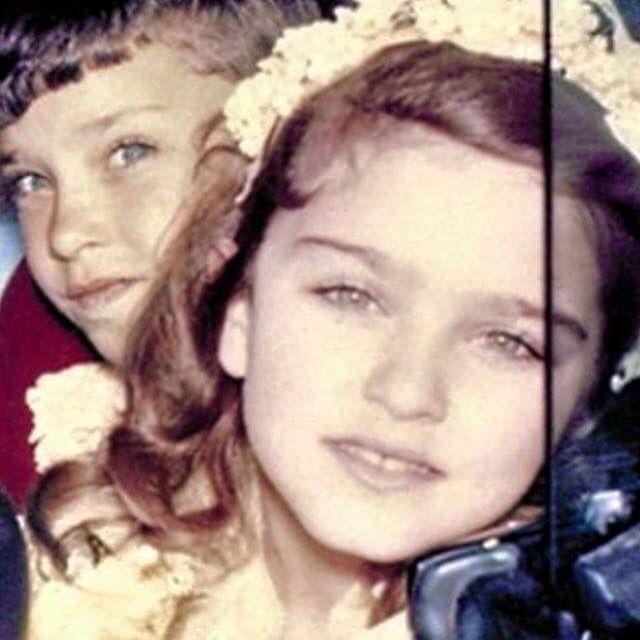
Born Madonna Louise Ciccone on August 16, 1958, in Bay City, Michigan, she grew up in a strict Catholic family in the suburbs of Detroit. But her life was marked by loss very early. When she was only five, her mother died of breast cancer a wound that would later shape her hunger for independence, control, survival, and visibility.
Before music, dance was her first language. She studied dance at the University of Michigan, but the world she wanted was larger than a university studio. In 1978, at nineteen, she moved to New York with only 35 dollars in her pocket. New York did not welcome her gently. She worked as a waitress, a dancer, a nude model for art classes, and lived through hunger, loneliness, and danger. But those streets gave her something no school could teach: stage instinct. At night, Madonna moved through New York’s underground clubs, where disco, punk, new wave, LGBTQ+ culture, and raw urban energy were colliding. She played drums in Breakfast Club, formed Emmy, and slowly understood that dancing was not enough. She needed a voice. In 1982, Everybody introduced her to the club scene. A year later, her debut album Madonna arrived with Holiday, Borderline, and Lucky Star. But what made Madonna different was never only the music. It was the image.
In a decade when female pop stars were often polished and controlled, Madonna looked as if she had stepped directly out of the street: lace gloves, layered skirts, oversized crosses, messy blonde hair, bold makeup, wide belts, and underwear worn as outerwear. It was not just styling. It was a declaration. Then came Like a Virgin the album that transformed her from rising star into global phenomenon. Her performance at the first MTV Video Music Awards, dressed as a bride in white, became one of the defining images of pop history. The media was shocked. Conservatives were furious. The audience was hypnotized. Madonna understood the formula: controversy, when combined with visual intelligence and the right song, could turn an artist into a myth. With True Blue, Madonna was no longer just the rebellious girl of MTV. She became a global star. Songs like Papa Don’t Preach, Open Your Heart, and La Isla Bonita showed that she could speak about love, family, personal choice, teenage pregnancy, and Latin culture and still dominate the charts.
Then came the explosion: Like a Prayer. The music video, filled with burning crosses, a Black saint, a church, race, faith, desire, and forbidden symbolism, became one of the most controversial works in music history. Religious groups protested. Her Pepsi campaign collapsed. But Madonna was not the loser of that story. She proved that a music video could become a cultural statement. Then Vogue arrived the moment Madonna brought ballroom culture and voguing from New York’s LGBTQ+ underground onto the global stage. The black-and-white video, inspired by classic Hollywood portraiture, turned fashion, gesture, body, and identity into one shared language. It was not just a song. It was the moment fashion, music, and queer culture entered the center of global pop.
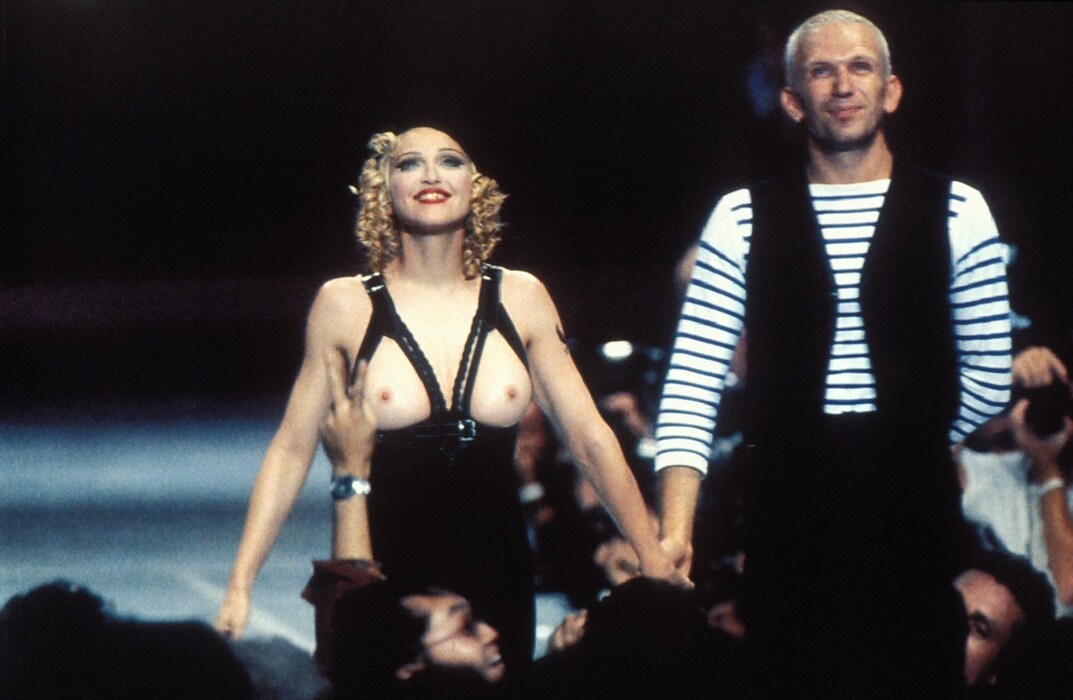
Around the same time, the Blond Ambition Tour was born a tour many still consider a turning point in pop performance. Madonna collaborated with Jean Paul Gaultier, and the legendary cone bra was created. Today, that piece holds an almost mythical place in fashion history. It was not simply a stage costume. It was a statement about the female body, power, seduction, control, and theatre. In 1992, with the Sex book and the Erotica album, Madonna divided the world once again. Photographed by Steven Meisel, Sex became one of the most controversial visual projects of the 1990s. The media attacked. Stores hesitated. Conservatives were enraged. But today, that project is remembered as one of the boldest moments in pop culture, fashion photography, and freedom of expression.
In the mid-1990s, she took another risk. She played Eva Perón in Evita a choice many initially questioned. But Madonna trained for months, refined her voice, and won the Golden Globe for Best Actress. For her, that victory mattered. It proved she could move beyond music and be taken seriously in cinema. Then came Ray of Light one of the most important artistic rebirths in pop history. After becoming a mother, Madonna entered a new world of Eastern philosophy, yoga, electronic music, and introspection. In the Frozen video, she appeared with dark hair, a long black dress, and a mysterious, almost spiritual presence a complete departure from the blonde glitter of the 1980s.
At the beginning of the 2000s, she changed direction again with Music. Cowboy hats, leather boots, denim, oversized belts, and Western codes entered her visual world. Once again, Madonna proved that she does not simply follow fashion. She recodes it. In 2003, one of the loudest moments in MTV history took place. Madonna appeared onstage with Britney Spears and Christina Aguilera, and her kiss with Britney became a global headline within seconds. It was more than a television shock. It felt as if the Queen of Pop was inviting the next generation of female stars into her kingdom while reminding everyone that the crown was still on her head.
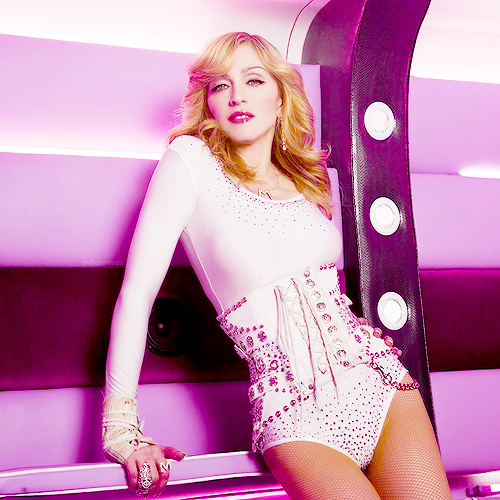
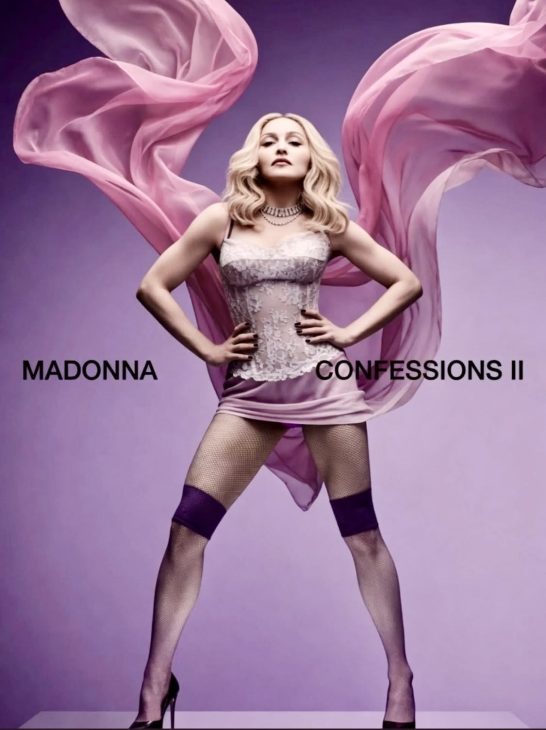
In 2005, with Confessions on a Dance Floor, Madonna delivered one of the smartest comebacks of her career. Hung Up, built around a sample from ABBA, became a worldwide success. The visual language of this era glossy bodysuits, pink leggings, wide belts, wavy hair, and futuristic disco energy brought Madonna back to the center of the dance floor.
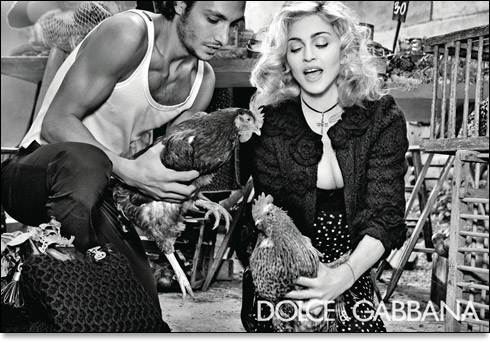
One of the secrets behind Madonna’s longevity is her deep relationship with fashion. She always understood that fashion is not just clothing. It is a language of power. From Jean Paul Gaultier to Dolce & Gabbana, from Alexander McQueen to Riccardo Tisci, from Donatella Versace to Tom Ford, Madonna worked with designers who could create a new body, a new image, and a new mythology for every era of her life.
At the Met Gala, her appearances have always been more than red carpet moments. In 2009, she appeared in Louis Vuitton with bunny ears playful, theatrical, and charged with the energetic spirit of the 1980s. In 2013, for Punk: Chaos to Couture, she arrived in a studded plaid Givenchy jacket, ripped fishnets, and metal chains one of the few guests who truly understood punk rather than simply decorating herself with it. In 2016, she created one of her most controversial Met Gala moments in a black cut-out Givenchy look. Many focused on how revealing the outfit was, but Madonna explained that the choice was about ageism and sexism why should a woman’s body become something to hide as she grows older?
In 2018, for Heavenly Bodies, she appeared in a church-inspired look designed by Jean Paul Gaultier and performed live. That moment was almost a summary of Madonna’s entire universe: religion, fashion, music, theatre, symbolism, controversy, and complete control of the stage. In 2025, she returned in a white Tom Ford suit by Haider Ackermann, holding a cigar, once again playing with masculine and feminine codes the image of a woman who still knows how to attract every eye without needing to shout.
Madonna was also as intelligent in business as she was onstage. In 1992, she founded Maverick, a company that included music, film, publishing, and artist management. This move proved that Madonna did not want to be merely a product of the music industry. She wanted ownership inside it.
She was a master of building an entire world. For Madonna, an album was never just a collection of songs. It was a full campaign. Every era included music, photography, clothing, interviews, music videos, tours, magazine covers, and even a new body language. This is why the Madonna brand was built on one simple but powerful formula: constant transformation.
Her tours were also part of this brand architecture. Blond Ambition, Sticky & Sweet, MDNA, Rebel Heart, Madame X, and finally The Celebration Tour all proved that a live performance could be a concert, a theatre production, a fashion show, video art, and a political statement at the same time.
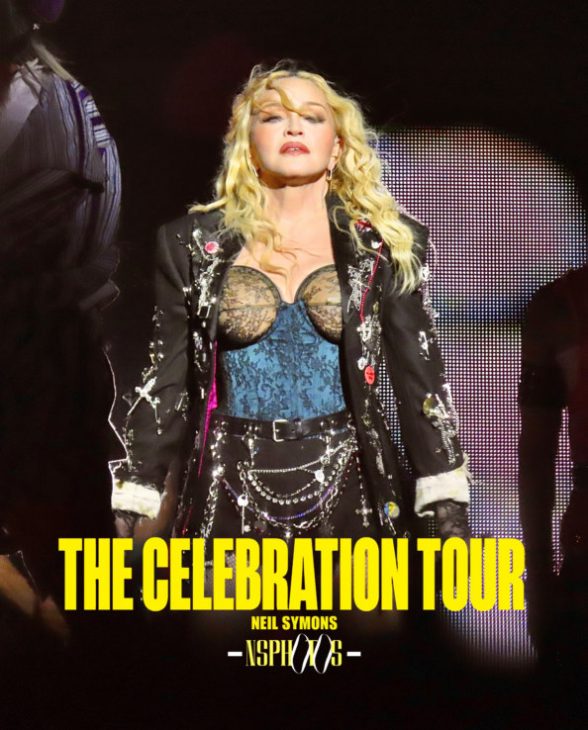
After a serious bacterial infection in 2023, many wondered whether she would return to the stage. But Madonna came back with The Celebration Tour a journey through four decades of her artistic life. The final free concert on Copacabana Beach in Rio de Janeiro, attended by around 1.6 million people, was not just a performance. It was a reminder: Madonna can still gather the world.
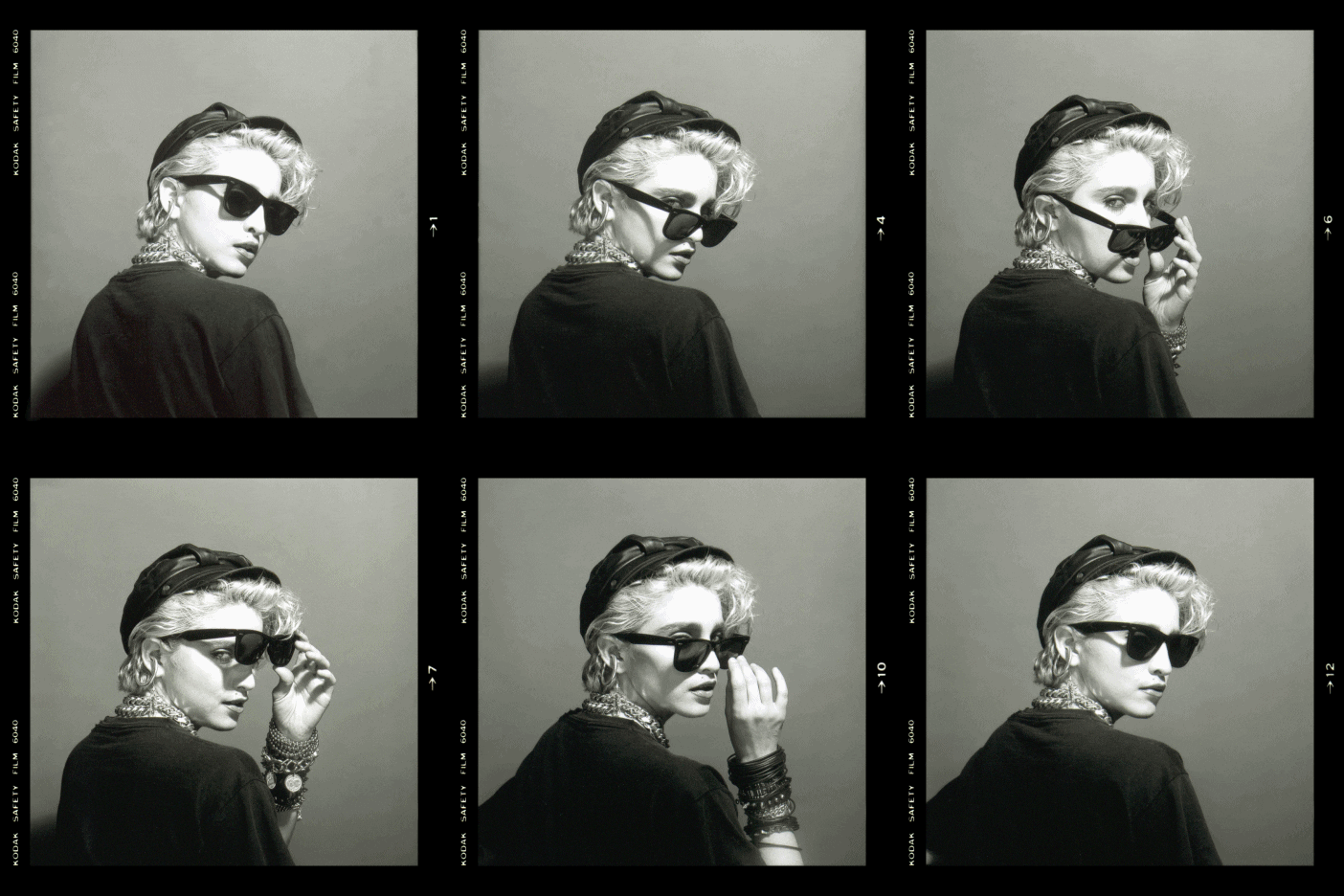
The secret of Madonna’s popularity is not that she has always been perfect. In fact, part of her fascination comes from the risks, failures, mistakes, and comebacks. She never played the role of the calm, predictable, universally approved woman. Madonna has angered people, inspired people, shocked people, moved ahead of her time, and at moments even been criticized by the same audiences that once worshipped her. But she has always remained at the center of the conversation. She taught the next generations that a woman in entertainment does not have to be only a performer. She can be a creator, an owner, an image-maker, a brand director, an entrepreneur, and the architect of her own legend. From Lady Gaga and Britney Spears to Beyoncé, Rihanna, and Taylor Swift, Madonna’s influence can be seen in the way female stars build visual identity and control their personal narratives. Madonna’s legacy is not limited to record sales, Grammy Awards, a Golden Globe, or her induction into the Rock and Roll Hall of Fame. Her real legacy is this: she proved that pop may look light but can leave a deep mark; fashion may look decorative but can become political; the body can become a battlefield; and a woman, in an industry constantly trying to define her, can become the one who defines herself.
Madonna is still a living question: How many times can a woman reinvent herself? Perhaps the answer is simple: As many times as she dares.